
Reymann : pilot developers and specialists
Building an editorial platform requires an organization capable of linking internal developers, specialized partners and production teams. The Reymann route gives concrete reality to this piloting.
Internal developers, specialists and several professions to coordinate around the same platform.
Technical steering, management and coordination of developers and partners
A piloting of skills and dependencies, from the platform project to the recasting and production projects.
See the tools
and their functions.
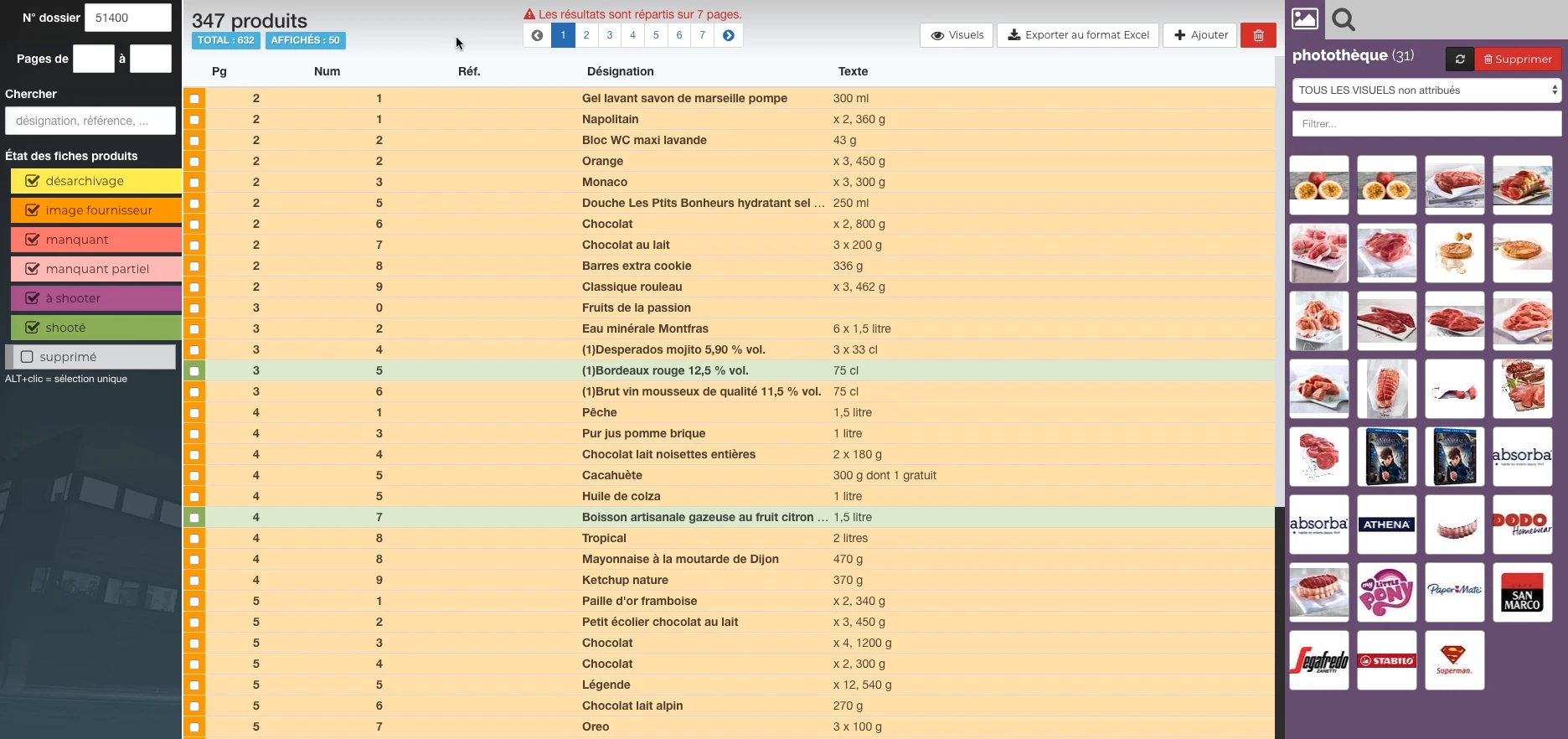
Views of the editorial environment Reymann, from the course of Patrice Salib, founder of Dtouch : data produced, composition and tracking of pages in Reysactive. Platform demonstration archive, 2018.
 Enlarge screen
Products and their state of preparation
A filterable list per state, folder references and the picture can be accessed in the same view.
Real Rey’actif interface · demo archive from 2018.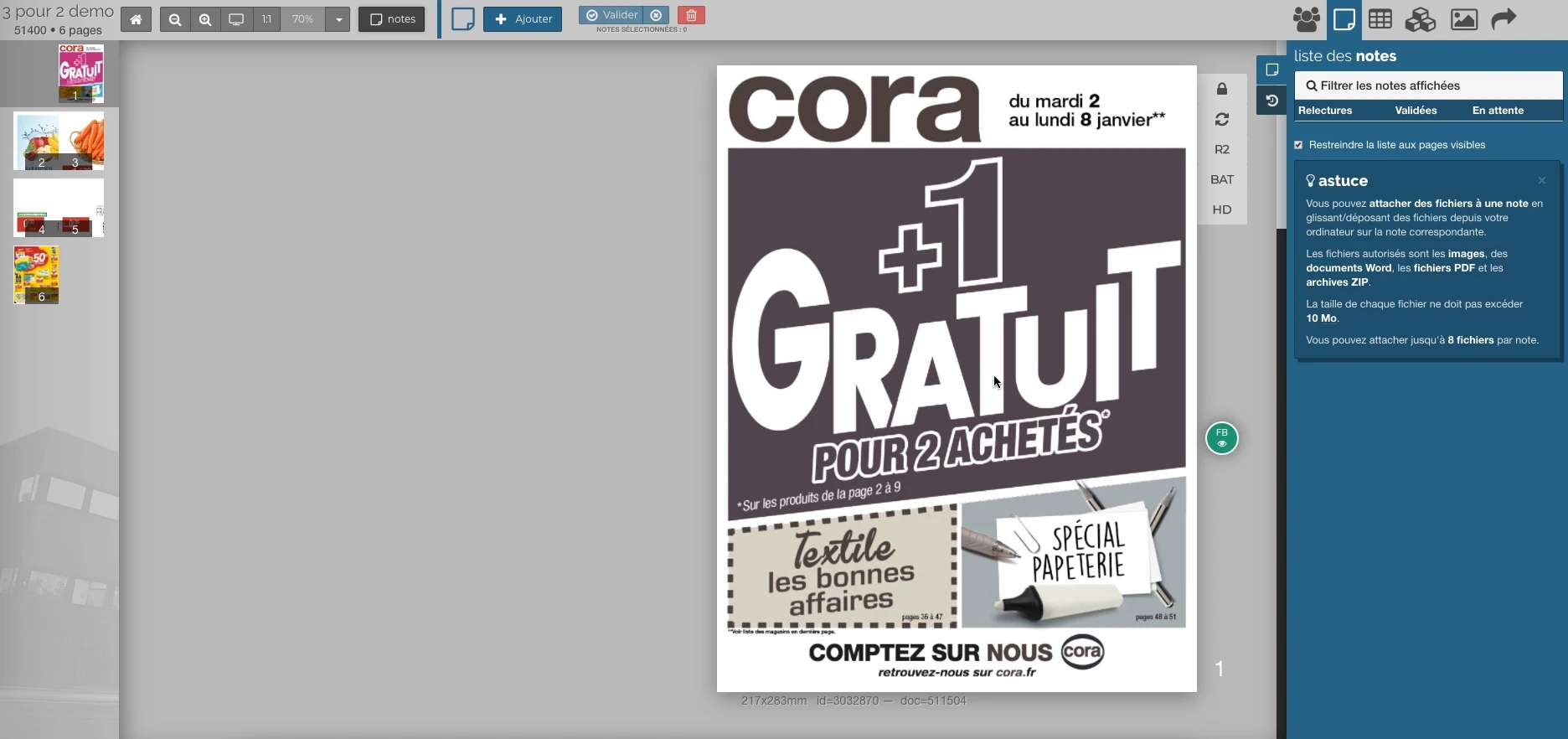 Enlarge screen
Notes attached to the publication
The outline, the validation steps and the annotations give a common context to the rereading of the pages.
Real Rey’actif interface · demo archive from 2018.2010: build a team around the platform
The collaborative platform project begins with a migration of the infrastructure, the integration of internal developers and the coordination of independents specialized in certain technologies. Patrice is involved in the management of this project and the organization of the necessary skills.
The platform must meet uses shared by several professions. The technical team works with the people who prepare the data, images and pages, to link developments to real production conditions.
Provide a framework for specialized developments
The system brings together business bases, web and desktop interfaces, image management, server processing and InDesign publishing. Each specialist works on part of this chain; management must preserve the coherence of the whole.
Patrice's contribution consists of bringing together business needs, technical constraints and discussions with developers. The interfaces between tools, expected files and production states become concrete points of coordination.
2014 and 2018: manage the overhaul projects
The overhaul of the collaborative platform in 2014 towards Node.js and AngularJS, then the evolution of the engine part from 4D in 2018, requires a reading of the dependencies and existing uses.
The role combines project management, integration and dialogue with developers. Changes must be examined at the chain level: product content, documents, processing, interfaces and operation.
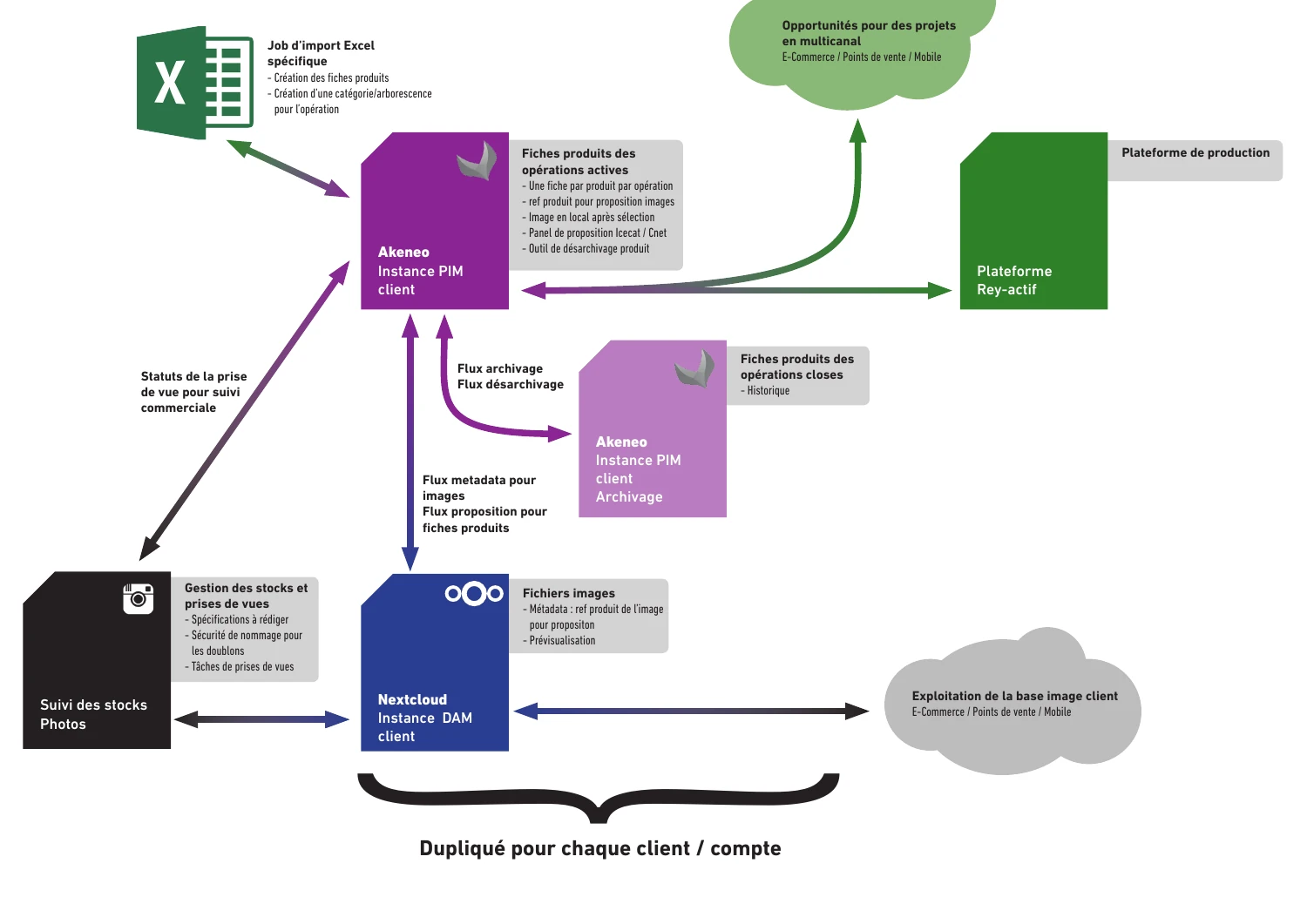
A 2017 architectural study to organize applications and their exchanges.
 Enlarge
Design document from January 2017: study of exchanges between Excel imports, PIM Akeneo, images in Nextcloud and Rey’actif production platform.
Architecture study · design document · 27/01/2017Link developers, production and offshore
Internal teams, development partners, and offshore stakeholders have different schedules and responsibilities. The planning, production instructions and feedback on the files allow us to share the context of the work.
Technical management involves training, organization and problem escalation. In the Reymann environment, a company of more than 100 people, this ability to circulate information complements development skills.
A leadership experience at the service of projects Dtouch
This practice allows you to approach a project with a view of the skills to be mobilized and the points to coordinate. A business request may require several interventions, the order and dependencies of which must be understood.
Dtouch extends this method: identified technical management, precise exchanges with specialists and attention to the results obtained by users.
This case study presents the experience of Patrice Salib, founder of Dtouch, acquired at Reymann with the agency's teams and its development and production partners.
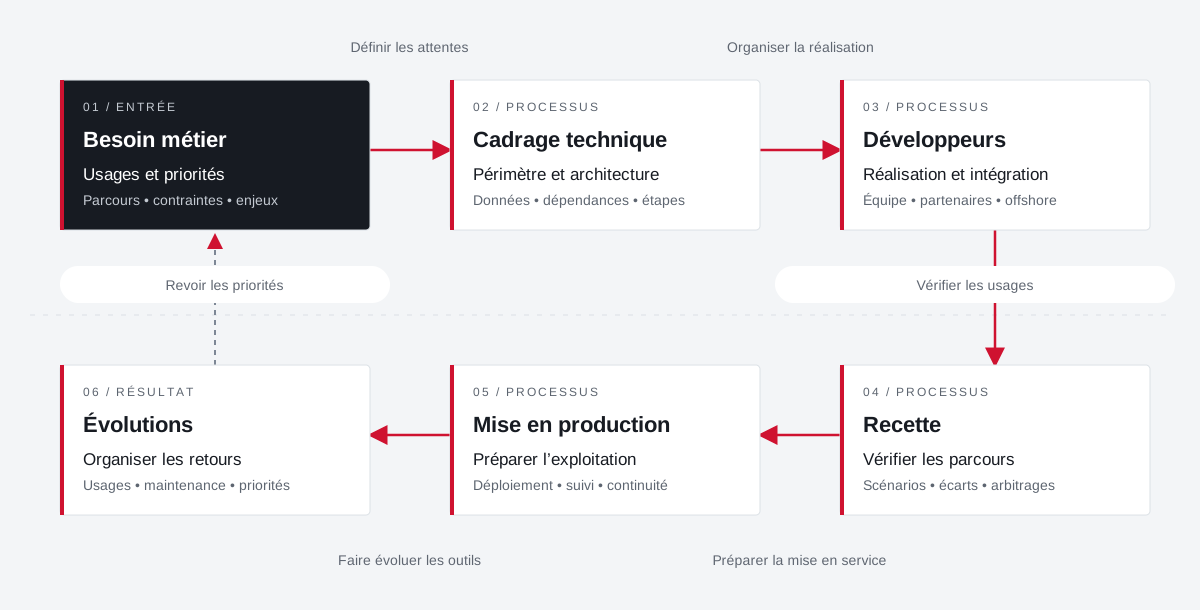
Manage developers and project dependencies.
The technical management role brings together business teams, developers and specialists to maintain consistency from framing to production.
 Enlarge the diagram
- 01Set expectations ↓
Business need
Uses and priorities
Journey • constraints • challenges - 02Organize the production ↓
Technical framework
Perimeter and architecture
Data • dependencies • steps - 03Checking uses ▼
Developers
Implementation and integration
Team • partners • offshore - 04Preparing for commissioning ▼
Recipe
Check the routes
Scenarios • differences • arbitrations - 05Develop tools ↓
Put into production
Preparing for exploitation
Deployment • monitoring • continuity - 06
Developments
Organize returns
Uses • maintenance • priorities
Enlarge the diagram Frame
Define expected results and responsibilities.
Coordinate
Treat dependencies between developers and specialists.
Transmit
Make decisions and operating conditions understandable.
Your job deserves
the right tools.
A specific need, a software to evolve, a project to frame.