
Functional framing & project management
Framing connects the people who ask for a solution to those who will build it. Dtouch specifies the uses, constraints and criteria which will allow the result to be verified.
Concrete functions.
Tools in situ.
Interfaces used to organize work, prepare data and track files. Each screen shows a specific function, with presentation data.
 Enlarge screen
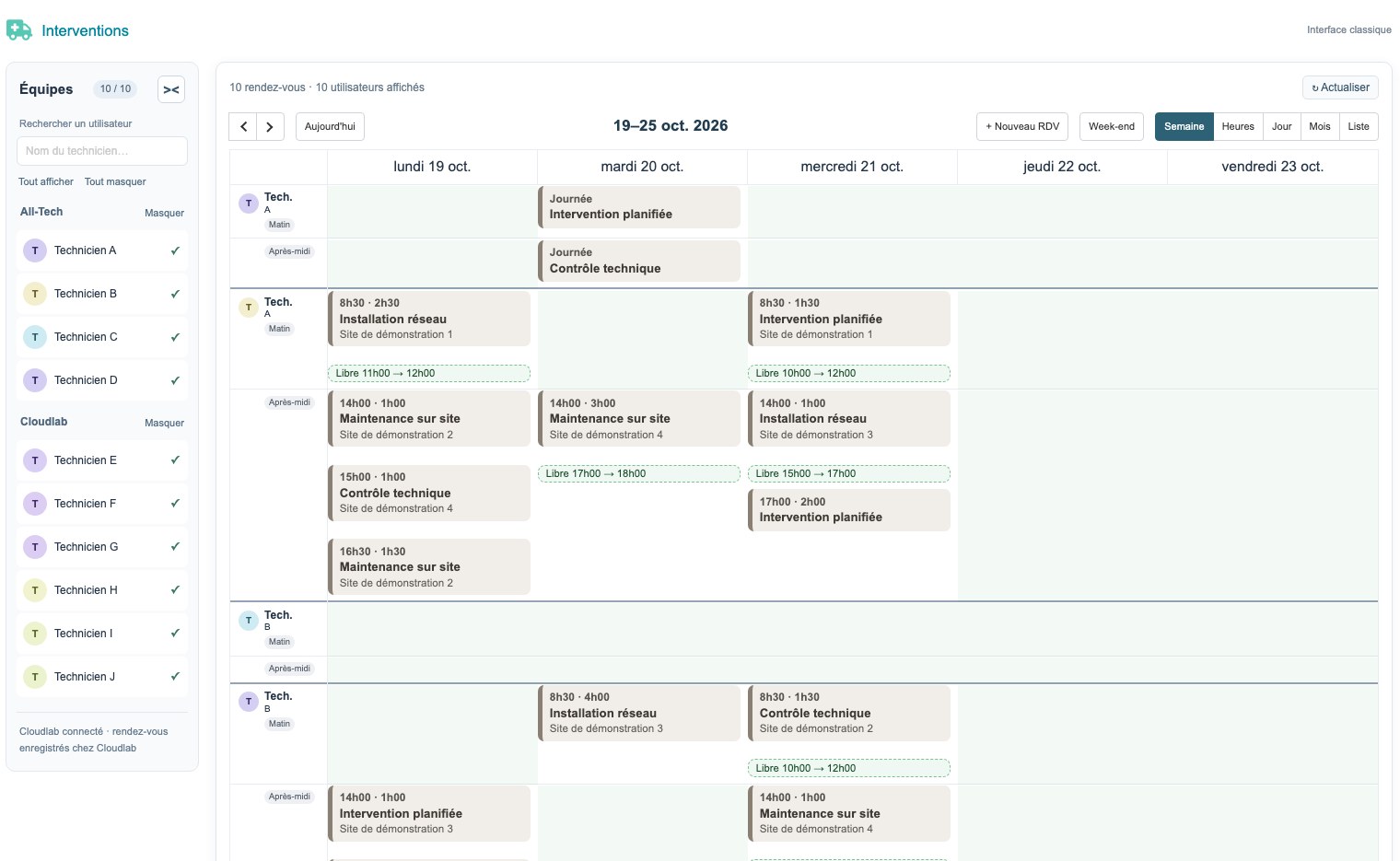
A common view for teams
The weekly schedule brings together technicians, slots, locations and interventions.
Real interface · test environment · demo data.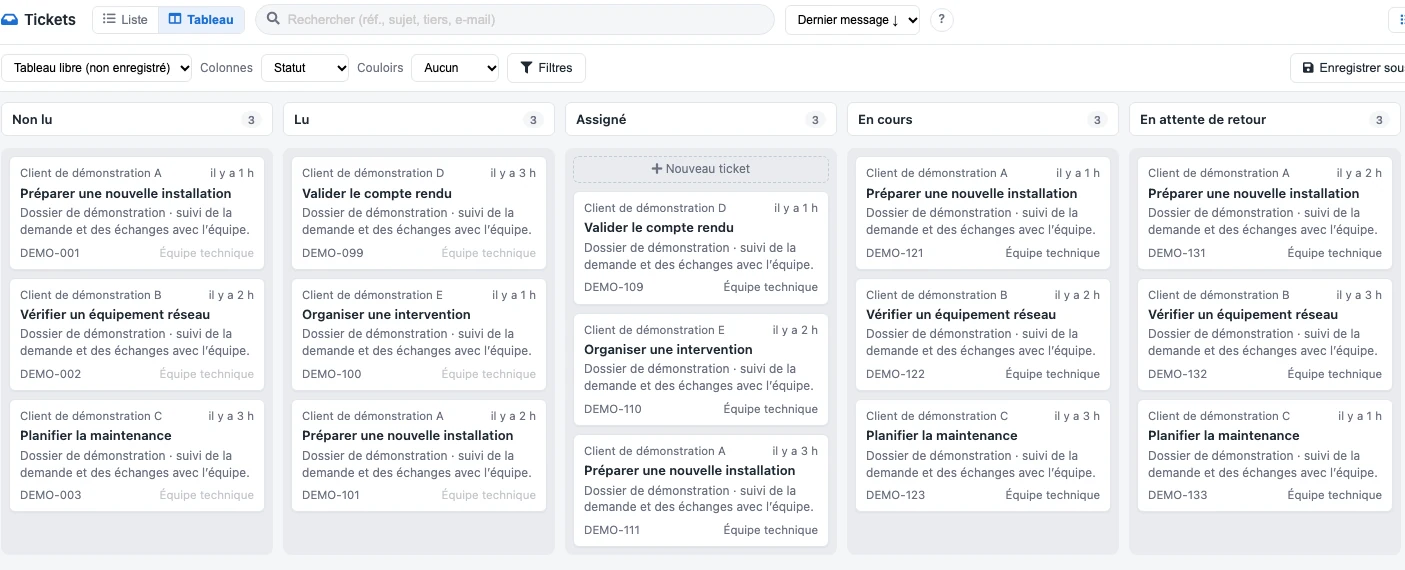 Enlarge screen
View folder progress
Requests are grouped by status, with their subject, an overview of the exchanges and the team in charge.
Real interface · test environment · demo data.Starting from operations and people
We describe the work situations: information available, decisions to be made, documents to be produced and people concerned. Actual practices complement the requests expressed in features.
This phase makes it possible to identify dependencies with other tools, entry difficulties and steps that require validation. The business vocabulary becomes the basis of the exchange with the developers.
Define a scope that can be evaluated
The project is organized into courses and stages. We specify the expected data, possible actions, rights and results to be controlled. Limits and dependencies are identified with the interlocutors.
This description provides benchmarks for arbitration. A request for development can be placed back in the planned operation and examined with regard to the other stages of the project.
Organize the production with specialists
The management divides the subjects between development, integration, data, infrastructure and professions. Checkpoints make it possible to check interfaces and resolve blockages with the people concerned.
Platform and distributed production experiences provide practice in this coordination. Technical decisions must remain linked to the uses that motivate them.
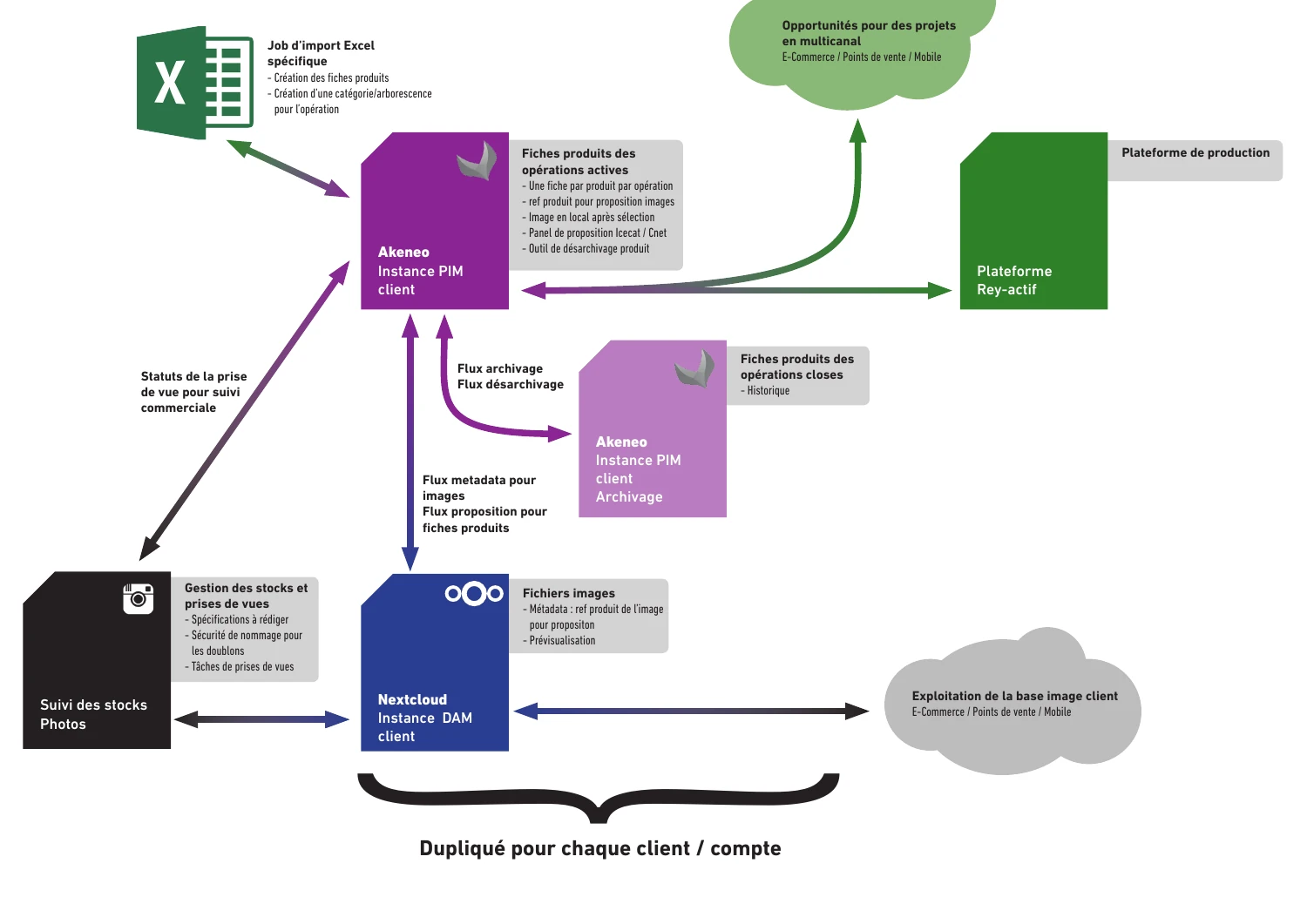
A 2017 architectural study to organize applications and their exchanges.
 Enlarge
Design document from January 2017: study of exchanges between Excel imports, PIM Akeneo, images in Nextcloud and Rey’actif production platform.
Architecture study · design document · 27/01/2017Prepare the recipe and accompany
The verification scenarios are defined based on the useful paths: create, modify, validate, produce a document, correct an error or find information.
Commissioning also includes the transmission of practices and monitoring of feedback. The project becomes valuable when the teams can understand and use the solution in their activity.
Manage developers and project dependencies.
The technical management role brings together business teams, developers and specialists to maintain consistency from framing to production.
 Enlarge the diagram
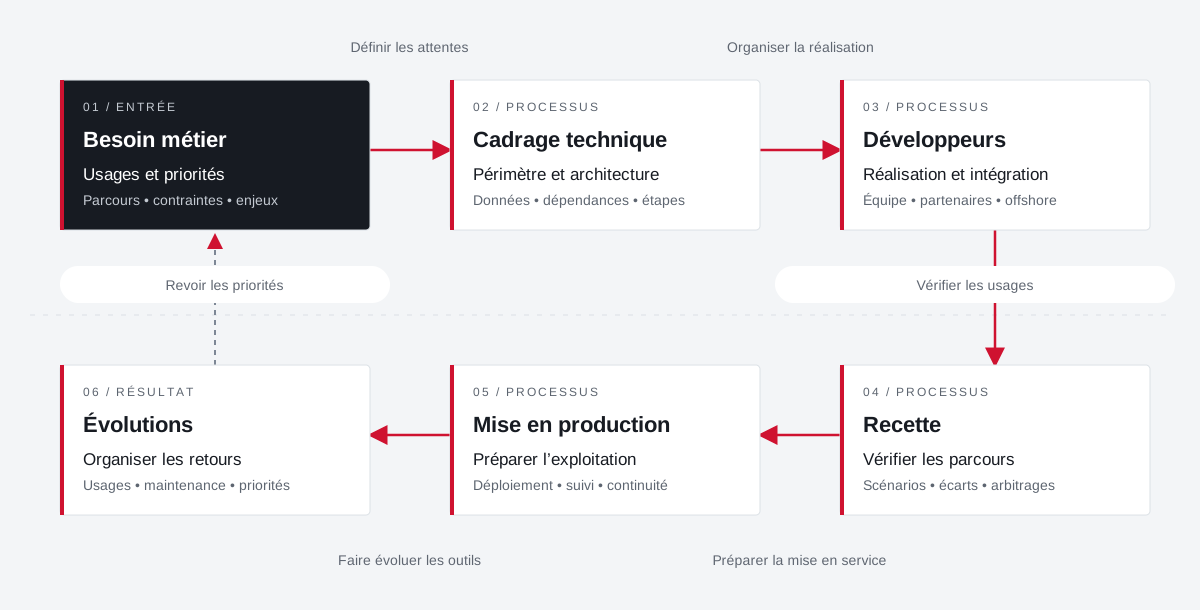
- 01Set expectations ↓
Business need
Uses and priorities
Journey • constraints • challenges - 02Organize the production ↓
Technical framework
Perimeter and architecture
Data • dependencies • steps - 03Checking uses ▼
Developers
Implementation and integration
Team • partners • offshore - 04Preparing for commissioning ▼
Recipe
Check the routes
Scenarios • differences • arbitrations - 05Develop tools ↓
Put into production
Preparing for exploitation
Deployment • monitoring • continuity - 06
Developments
Organize returns
Uses • maintenance • priorities
Enlarge the diagram Frame
Define expected results and responsibilities.
Coordinate
Treat dependencies between developers and specialists.
Transmit
Make decisions and operating conditions understandable.
Projects and concrete situations.
Reymann : pilot developers and specialists
Founder's Experience · Reymann
Building an editorial platform requires an organization capable of linking internal developers, specialized partners and production teams. The Reymann route gives concrete reality to this piloting.
Explore the caseRey-Active: Connecting a complete platform
Founder's Experience · Reymann
PIM, office applications, web services, image tasks, InDesign Server and business bases: experience in the articulation between the components of a production platform.
Explore the caseDalim TWIST: unify flows and their parameters
Founder's Experience · Reymann
Moving from around twenty production flows to generic flows linked to file data: integration between 4D, Rey’actif, Dalim TWIST and ICC profiles.
Explore the caseYour job deserves
the right tools.
A specific need, a software to evolve, a project to frame.