
PIM & product data
A catalogue page depends on a coherent product material. The journey Reymann combines PIM, texts, images and editorial platform, with data exploited by several tools and teams.
The tools of the
editorial production.
These Rey’actif views situate the functions in the editorial chain: products, images, pages and validation. They come from a demonstration of the platform in 2018.
 Enlarge screen
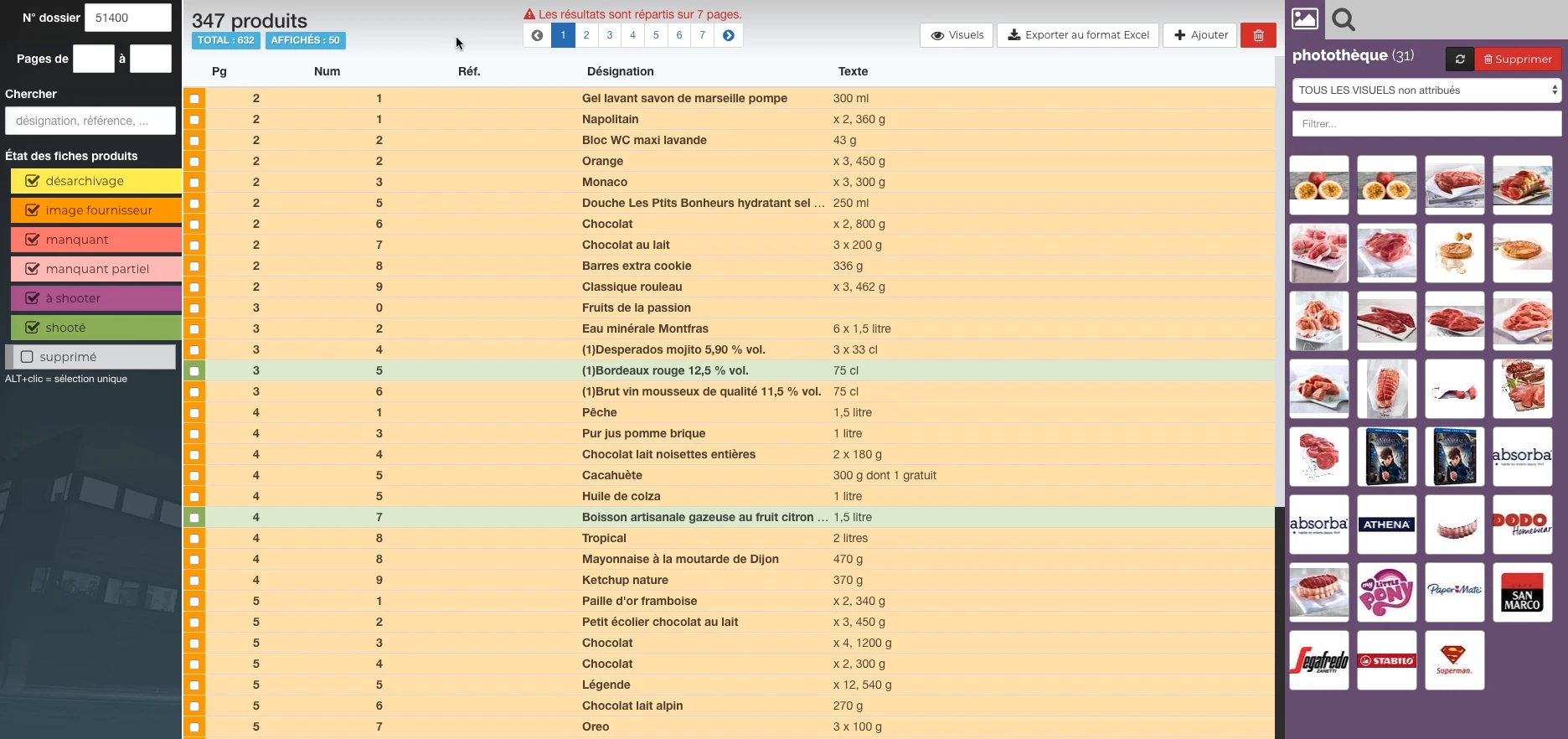
Products and their state of preparation
A filterable list per state, folder references and the picture can be accessed in the same view.
Real Rey’actif interface · demo archive from 2018.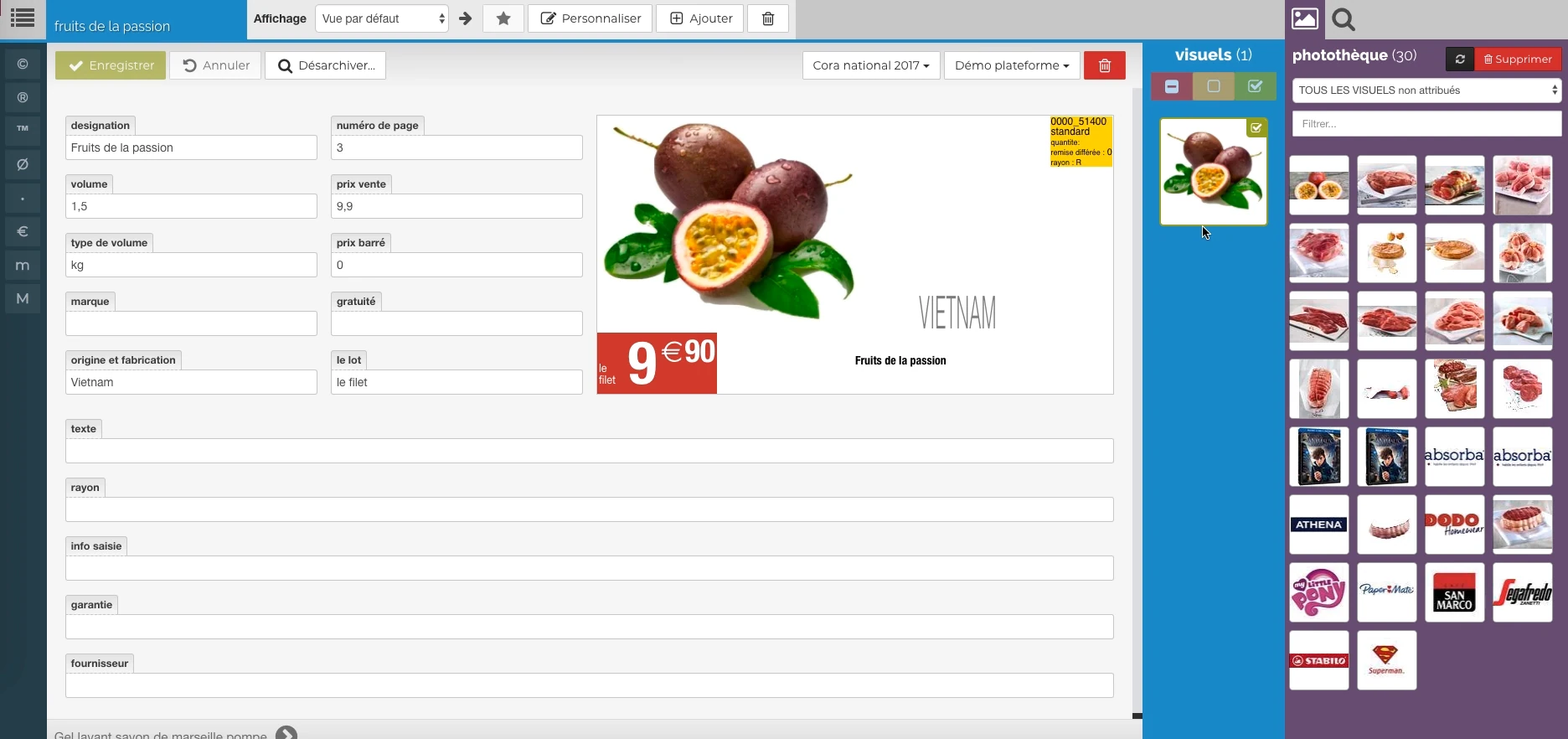 Enlarge screen
The data meets the visual
Description, price, origin and packaging provide a preview, with image resources alongside.
Real Rey’actif interface · demo archive from 2018.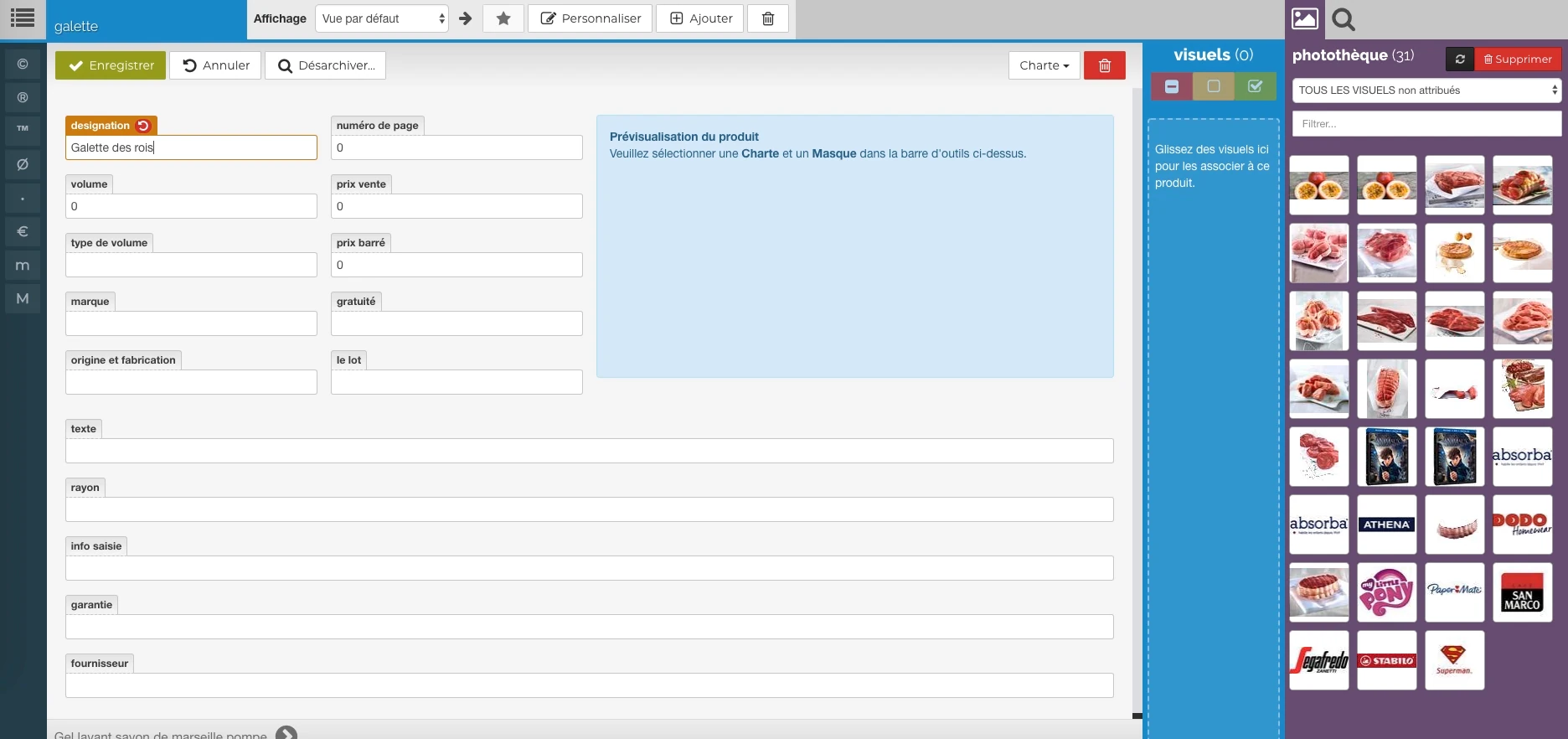 Enlarge screen
A structured sheet for publishing
The offer fields and visuals are brought together before the product is used on the pages.
Real Rey’actif interface · demo archive from 2018.A benchmark for product content
The PIM brings together the information and media necessary for the preparation of publications. It must make it possible to find a reference, its designation, its description and the images which correspond to it, without confusing the product with a catalog edition.
In the Rey’actif ecosystem, text and image management had its own PostgreSQL database and dedicated indexing. Its articulation with production tools required particular attention to identifiers, correspondences and uses.
Linking the product to its images and versions
The same product can have an original, a touch-up, a detour and declinations suitable for different outputs. The data must be able to trace these resources and understand their destination.
Catalog editions bring other variations: prices, conditional texts, markets and highlights. The repository and publication rules must remain consistent when several media are opened in parallel.
Preparing for discussion with layout
Repository fields must find their place in blocks, assignments and exports. The Ludendo and Match experiences illustrate these connections between structured content, ICML, XML and InDesign documents.
The control concerns the content but also its structure: keep a useful tag, distinguish an empty field from a deleted field and find the right image even in the archives.
Interfaces of the Reymann editorial channel, in their period version. These archives illustrate the journey of Patrice Salib, founder of Dtouch, within the agency.
 Enlarge
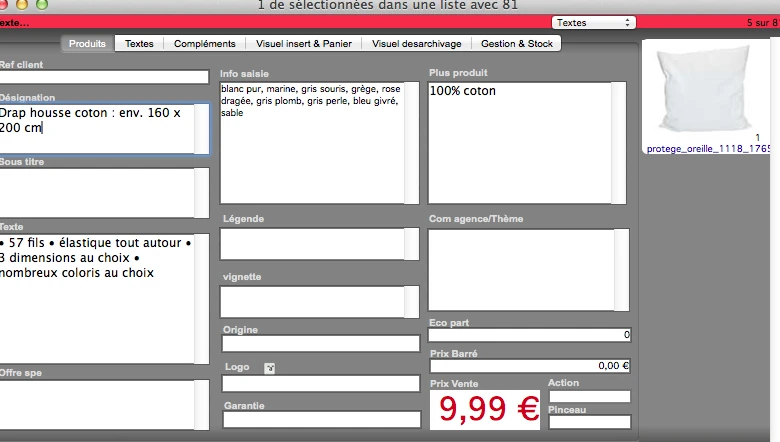
A structured fact sheet contains designation, entry information, text, origin and commercial information.
Archive Reymann · interface extract · 02/07/2014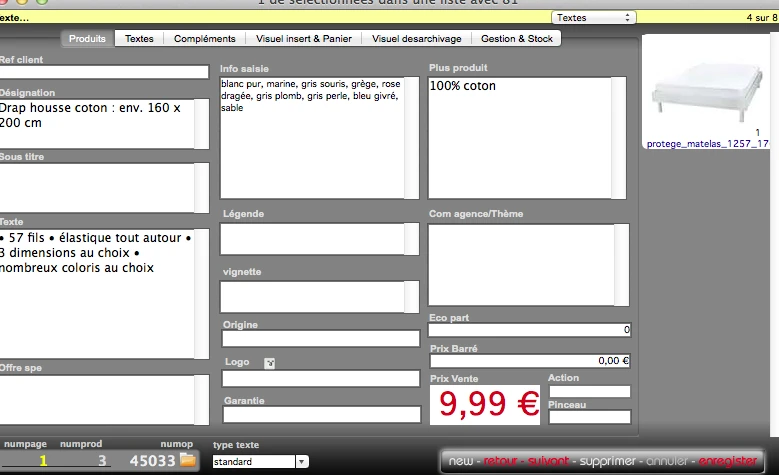 Enlarge
The product data, price and visual are reconciled before being included in the publication.
Archive Reymann · interface extract · 02/07/2014Making the repository workable over time
Resumptions and imports can introduce duplicates, incomplete fields or references whose resources have been moved. The controls must help qualify these discrepancies before publication.
The work brings together business teams and developers: defining what is referred to, specifying the update rules and checking the consequences of a modification in the connected tools.
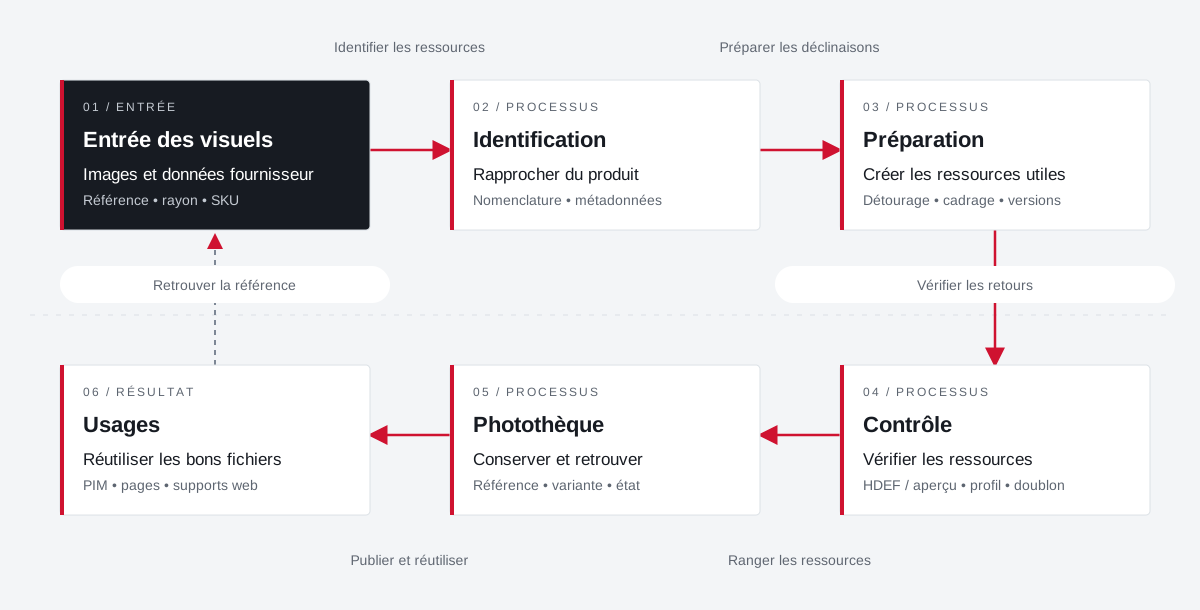
An image returns its product, versions and uses.
The organization of the photo library combines identifiers, metadata, preparation of visuals and reuse in publications.
 Enlarge the diagram
- 01Identify resources ↓
Entry of visuals
Images and supplier data
Reference • radius • SKU - 02Preparing for Decline ▼
Identification
Bringing the product closer
Nomenclature • metadata - 03Check returns ▼
Preparation
Create useful resources
Clipping • framing • versions - 04Sorting resources ▼
Control
Check resources
HDEF / overview • profile • duplicate - 05Publish and reuse ▼
Photo library
Preserve and find
Reference • variant • condition - 06
Uses
Reuse the right files
PIM • pages • web supports
Enlarge the diagram Closer
Distinguish between the product, the original file and its variations.
Control
Identify duplicates and gaps between previews and high definition.
Reuse
Find the appropriate visual for the document and its destination.
Your job deserves
the right tools.
A specific need, a software to evolve, a project to frame.