
UTS & InDesign Server: linking typography to generation
A back-engineering around Universal Type Server to make typographies available in the InDesign Server generation chain.
See the tools
and their functions.
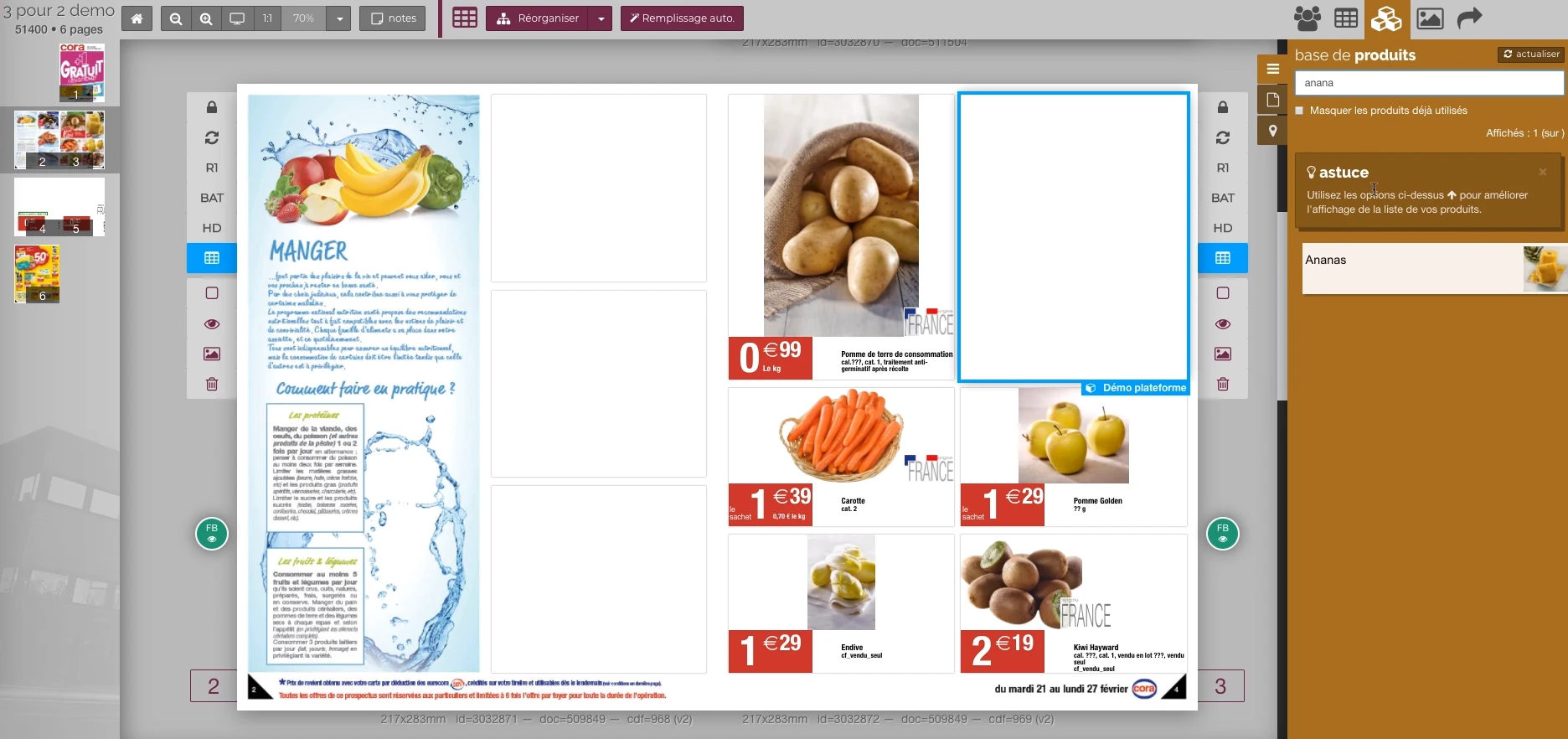
Visual highlights of the editorial environment Reymann, where Patrice Salib, founder of Dtouch, exercised. These 2018 Rey-Active demo views illustrate the platform's common functions, in a context distinct from the client folder presented.
 Enlarge screen
From the product to its location on the page
The double page, the thumbnail and the product base allow you to work in the context of the publication.
Real Rey’actif interface · demo archive from 2018.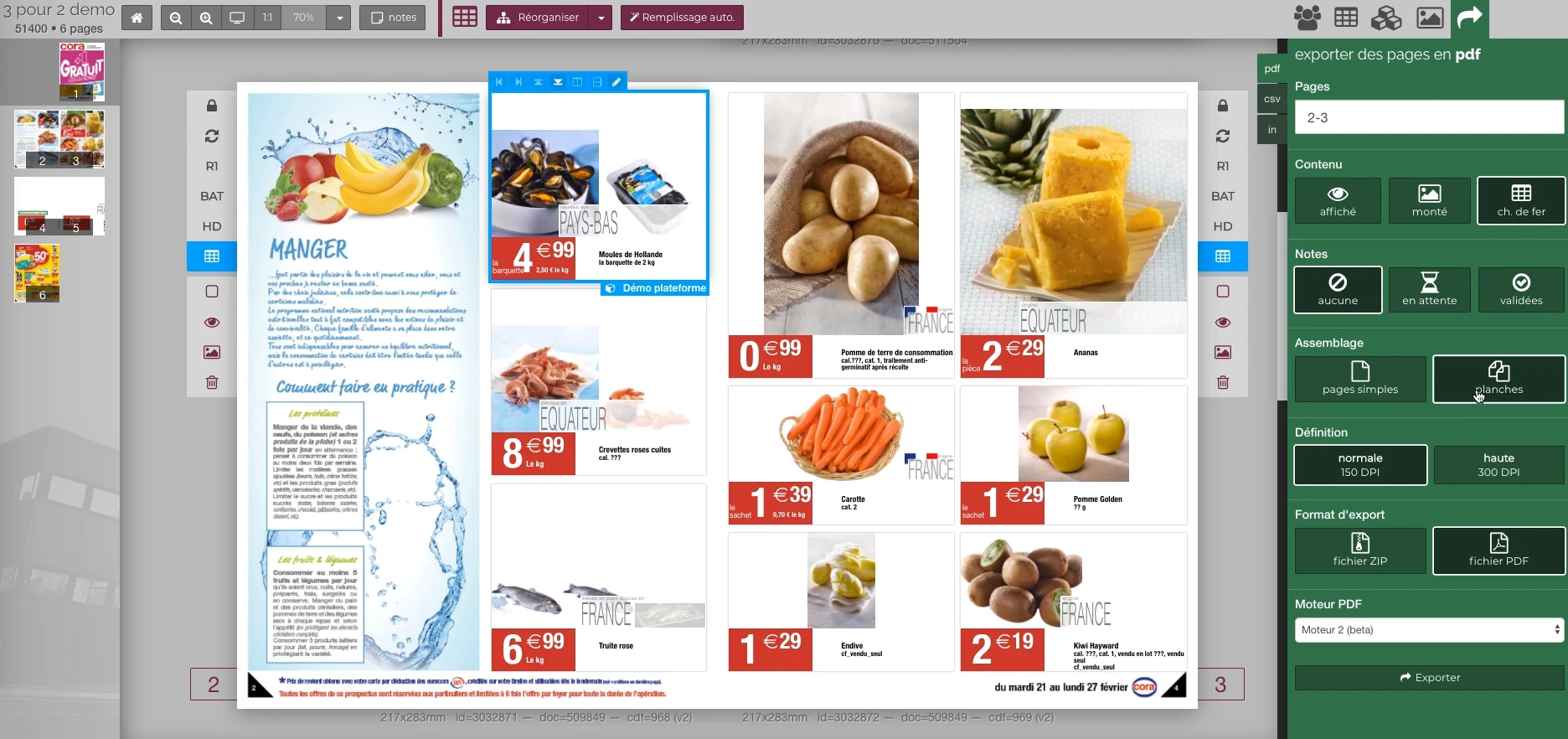 Enlarge screen
Preparing the output of the document
The document remains visible next to the PDF output panel and the parameters offered in the platform.
Real Rey’actif interface · demo archive from 2018.The same page must find its fonts on the server
The document prepared by a graphic designer depends on font families, styles and versions. The generation engine must find these dependencies to produce a faithful layout.
In a chain of multi-version catalogs, a typographical deviation can be repeated in several editions. It is therefore necessary to treat its cause in the generation environment, and verify the result in the documents produced.
Retro-engineering and integration work
Patrice worked with the Reymann team on understanding and hooking up UTS to enable the use of typographies in InDesign Server. The approach combined analysis of existing operations, integration with the chain and testing of documents.
Reverse engineering and coordination with the publisher completed integration testing between the font server and the generation engine.
Diagnose production gaps
The feedback from the platform identified documents with missing fonts. The interventions had to distinguish an absent font from a bad variant or from an already present resource to be replaced.
Corrections to the fonts used by Norma required checking the document and its font directory, replacing the correct variant and checking the result in the generation.
A skill at the intersection of several trades
Typography links graphic charter, layout, server, PDF generation and control. Understanding this chain allows you to work with graphic designers, developers and production based on the same concrete problem.
The connection of specialized tools illustrates the contribution of Patrice: making the components necessary for production work together, with internal teams and partners.
This case study presents the experience of Patrice Salib, founder of Dtouch, acquired at Reymann with the agency's teams and its development and production partners.
Data, images
and production combined.
An active Rey-Active demo archive to situate the technical context of this journey.
Matching typographical resources to InDesign Server.
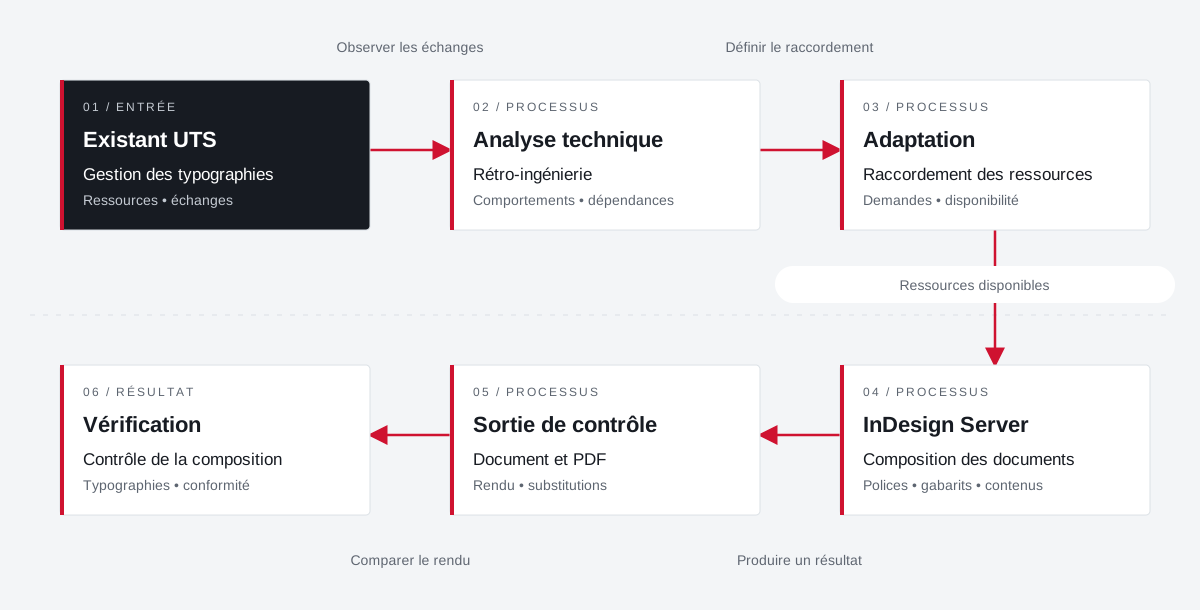
The UTS experience combines analysis of exchanges, adaptation and control of output. The diagram situates typography in the composition process.
 Enlarge the diagram
- 01Observe the exchanges ↓
Existing UTS
Typography management
Resources • exchanges - 02Define connection ↓
Technical analysis
Retro-engineering
Behaviors • dependencies - 03Resources available ▼
Adaptation
Linking resources
Requests • availability - 04Produce a result ▼
InDesign Server
Composition of documents
Fonts • templates • content - 05Compare rendering ↓
Check output
Document and PDF
• Substitutions - 06
Verification
Composition control
Typographies • compliance
Enlarge the diagram Understand
Reconstitute the useful operation at the connection.
Integrate
Linking typographical resources to composition requests.
Check
Check the rendering of documents and possible substitutions.
Your job deserves
the right tools.
A specific need, a software to evolve, a project to frame.