
JPEG & PDF: recover information from the heart of files
Traces incorporated into JPEGs, Apoove annotations, images and attachments: processing to make information usable between applications.
See the tools
and their functions.
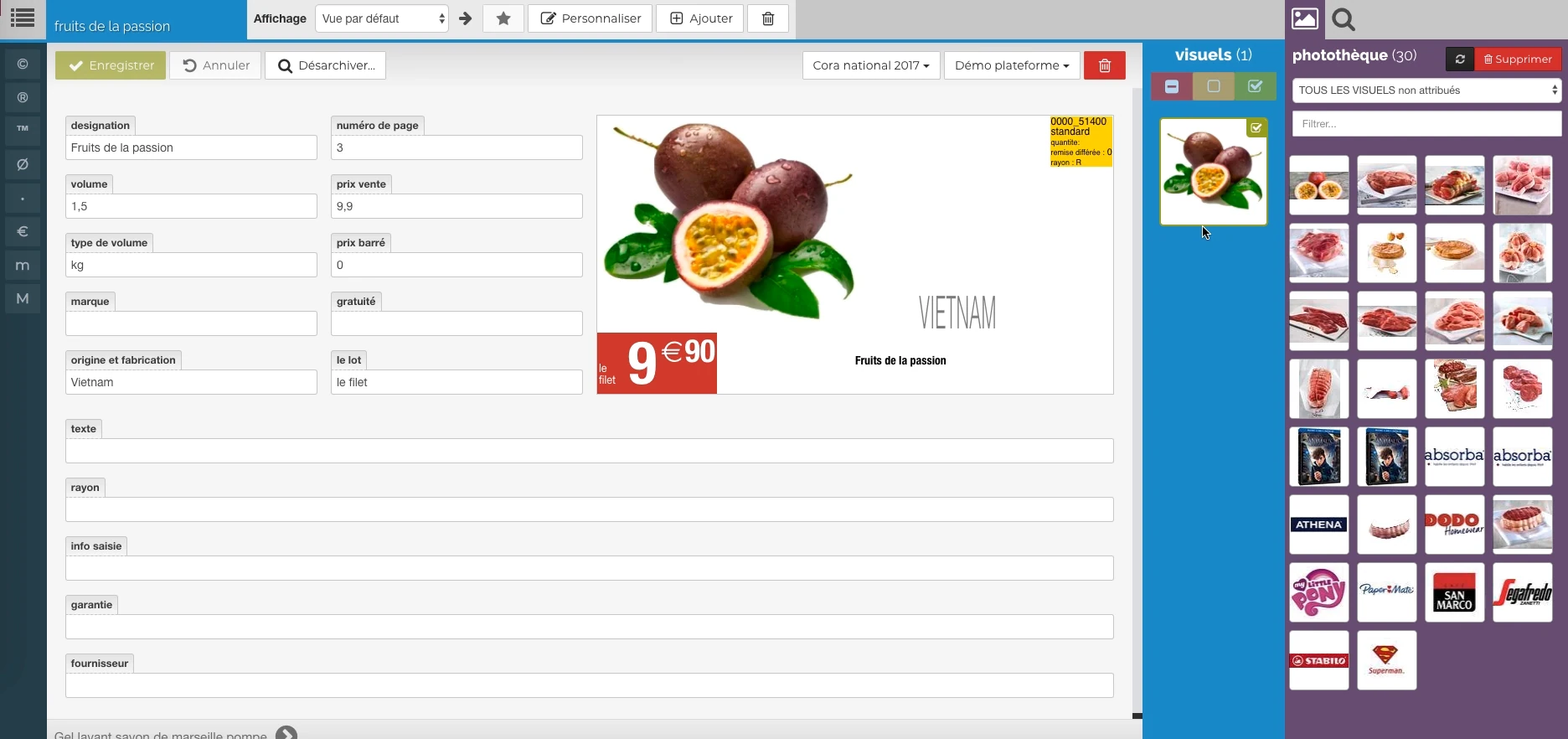
Visual highlights of the editorial environment Reymann, where Patrice Salib, founder of Dtouch, exercised. These 2018 Rey-Active demo views illustrate the platform's common functions, in a context distinct from the client folder presented.
 Enlarge screen
The data meets the visual
Description, price, origin and packaging provide a preview, with image resources alongside.
Real Rey’actif interface · demo archive from 2018.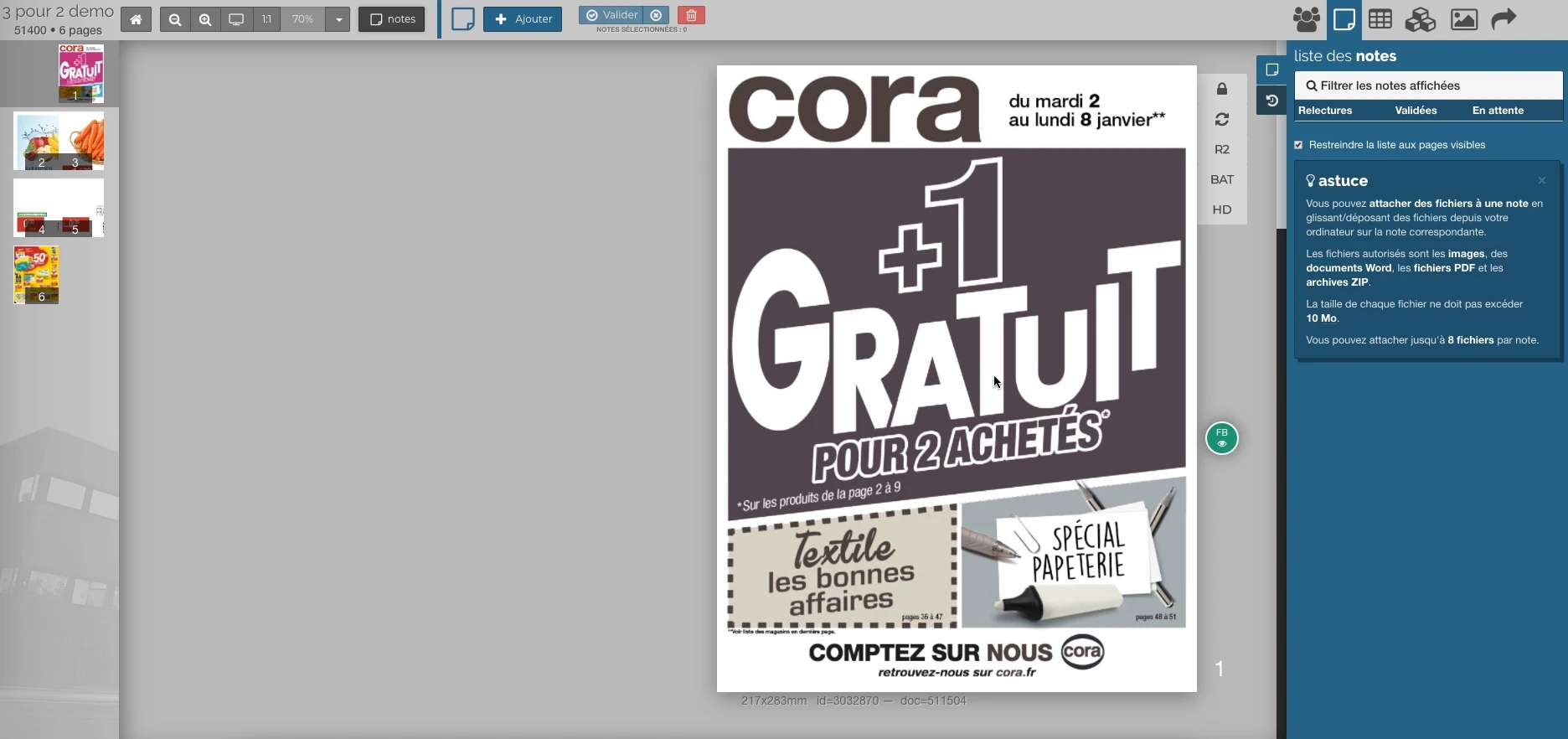 Enlarge screen
Notes attached to the publication
The outline, the validation steps and the annotations give a common context to the rereading of the pages.
Real Rey’actif interface · demo archive from 2018.The file contains more than its preview
A JPEG image can contain the information of a Photoshop plot; a validation PDF can carry annotations, texts, images and attachments. These elements must be understood and identified in order to be included in a production circuit.
Extract and reintegrate JPEG plots
The utilities developed for the Reymann chain made it possible to identify the active layout, extract or replace 8BIM resources, crop on the clipping with a margin and keep only the useful layout. Their integration automated part of the preparation and image feedback.
The processing had to preserve the consistency between the cropping and the coordinates of the plot. This link between file structure and graphic operation is essential when processing occurs one after the other without manual intervention.
Recover the annotations of the Apoove PDF
Work on PDFs covered annotations, their associated information, texts, embedded images and attachments. The cases encountered led to support for ASCII85 and ASCIIHex encodings and to distinguish images actually embedded from those simply referenced.
The objective was to find structured information to link it to the page, the document and the tools which use the correction.
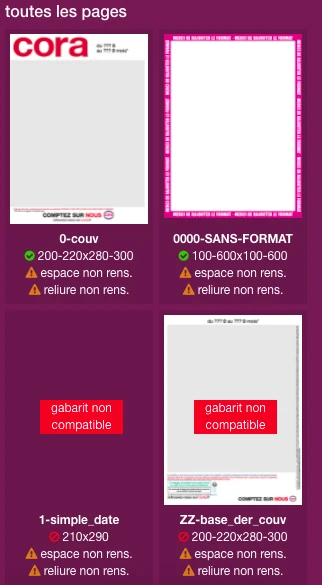
Interfaces of the Reymann editorial channel, in their period version. These archives illustrate the journey of Patrice Salib, founder of Dtouch, within the agency.
 Enlarge
Flags flag missing properties or incompatible templates before pages are assembled.
Archive Reymann · interface extract · 06/16/2021Integration linked to production
These processing operations were part of the overall editorial project: data, files, partner feedback, validation and notifications. They illustrate the ability to analyze existing material to build a connection adapted to real uses.
Work carried out in the framework Reymann with partner teams and developers, including Hervé Murgalé / Pi Solutions. The role presented is that of the Patrice Salib, founder of Dtouch, in project conduct and integration.
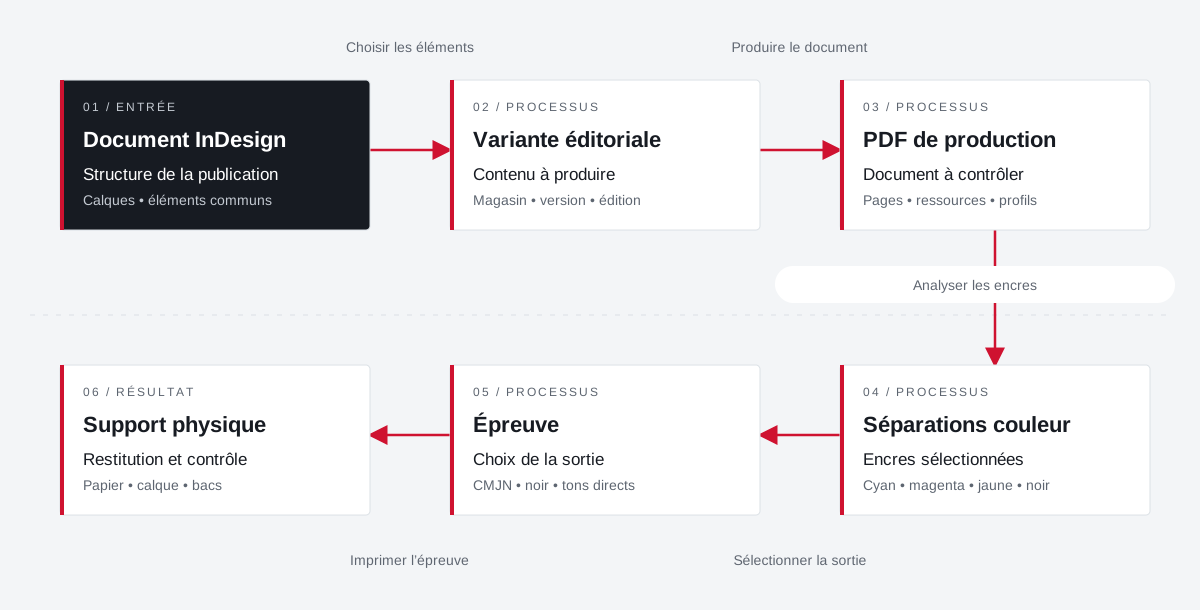
Variants, inks and support each have their role.
Layers organize the document. The separations isolate the inks. The paper or tracing paper are the physical supports of the test.
 Enlarge the diagram
- 01Choose items ↓
InDesign document
Publication structure
Layers • common elements - 02Produce document ▼
Editorial variant
Content to produce
Store • version • edition - 03Analyze inks ↓
Production PDF
Document to check
Pages • resources • profiles - 04Select output ▼
Colour separations
Selected inks
Cyan • magenta • yellow • black - 05Print the proof ↓
Test
Choice of exit
CMYK • black • spot colors - 06
Physical support
Return and control
Paper • tracing • trays
Enlarge the diagram Document
Check the variant and the layer elements.
Inks
Control expected separations and spot colors.
Test
Adapt the selection, format and output media.
Your job deserves
the right tools.
A specific need, a software to evolve, a project to frame.